
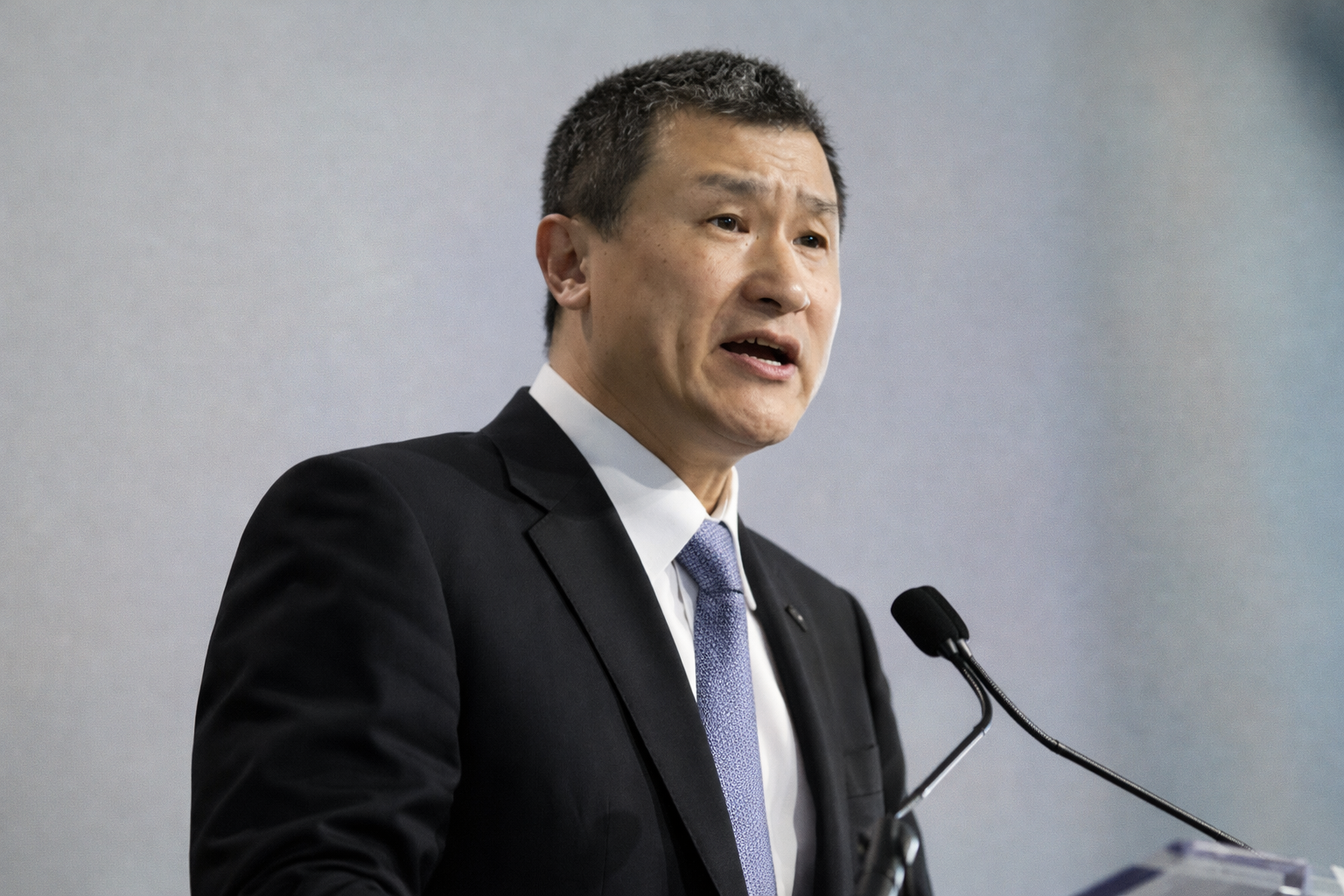
‘Chinese Warren Buffett’ has stakes in these 3 stocks: should you buy too?
Li Lu may not be a household name for retail investors, but in the halls of Berkshire Hathaway, he is revered.
Born in China and shaped by the 1989 student protests, Lu eventually found his calling at Columbia University after hearing a lecture by Warren Buffett.
His investment firm, Himalaya Capital, now manages $3.5 billion with a concentrated strategy that mirrors the “buy and hold” philosophy of his late mentor, Charlie Munger.
By the end of 2025, a staggering 75% of Lu’s portfolio was anchored in just three powerhouses: Alphabet, Bank of America, and PDD Holdings.
Alphabet Inc: the AI fortress and search dominant
Alphabet stock remains the crown jewel of Lu’s portfolio, representing a massive 44% stake split between Class A and C shares.
While critics once feared that generative AI would erode Google’s search hegemony, the company has proven remarkably resilient.
Recent legal victories against Department of Justice antitrust efforts have cleared significant regulatory clouds, allowing the tech giant to lean into its AI integration.
Beyond search, Alphabet’s ecosystem is diversifying rapidly; YouTube remains a dominant force in digital media, while Waymo leads the nascent autonomous ride-hailing sector.
Trading at roughly 26 times forward earnings, Googles shares offer a rare blend of “Magnificent Seven” growth with a multiple that value investors like Lu still find palatable.
Bank of America: scaling through economic volatility
Representing 16% of Himalaya’s capital, Bank of America serves as Lu’s primary bet on the enduring scale of the US financial system.
Despite recent geopolitical tremors in the Middle East driving energy price spikes, the banking sector has found a tailwind in a steepening yield curve and a shifting regulatory tide.
Investors are particularly optimistic about a ‘deregulation rally” as Federal Reserve officials signal a potential easing of the stringent capital requirements born from the 2008 crisis.
For a titan like Bank of America, lower capital mandates translate directly into higher shareholder returns through dividends and buybacks.
Its massive infrastructure allows it to absorb tech costs that smaller rivals simply can’t, making it a classic “scale play.”
PDD Holdings: a contrarian bet on Chinese e-commerce
The most controversial of Lu’s “Big Three” is PDD Holdings, the parent company of Pinduoduo and the global disruptor Temu.
At 15% of the portfolio, this position highlights Lu’s willingness to go against the grain.
While Chinese stocks have faced a gruelling five-year downturn due to sluggish consumer confidence and fierce margin wars, PDD offers a valuation gap that is hard to ignore.
Trading at a meagre 8 times forward earnings – compared to over 23x for US tech benchmarks – PDD shares are a high-conviction play on an eventual Chinese economic recovery.
For Lu, the risk of regional regulatory complexity is offset by the sheer efficiency and explosive global reach of Temu’s supply chain model.
The post 'Chinese Warren Buffett' has stakes in these 3 stocks: should you buy too? appeared first on Invezz